
How to Choose Operational Intelligence Software for a Multi-Site Estate
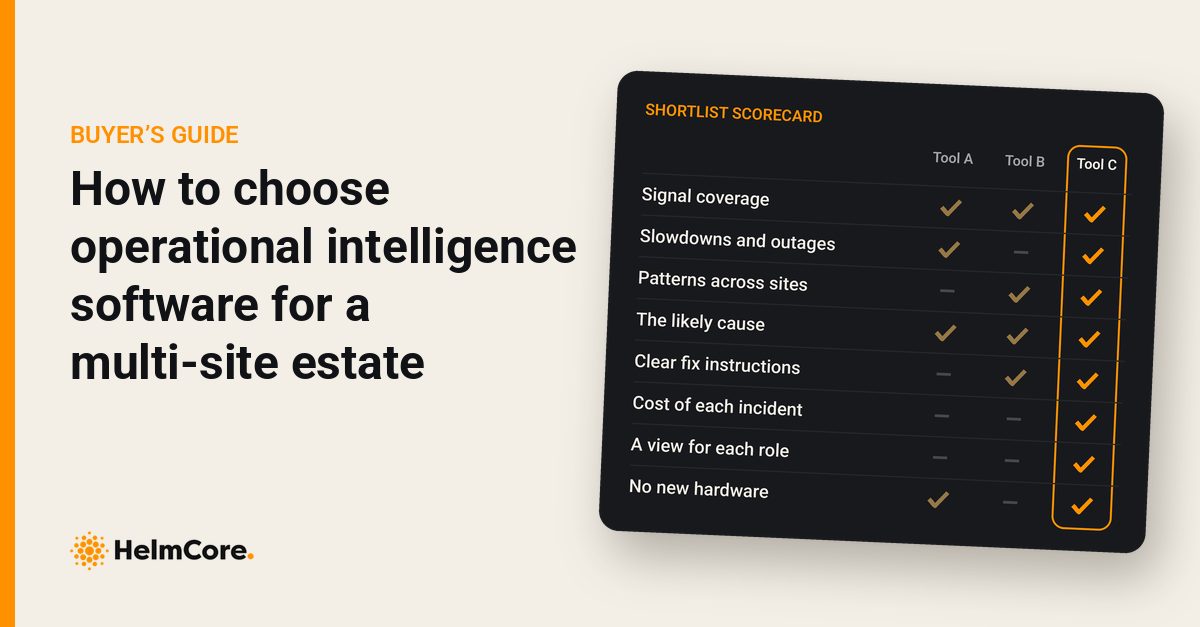
If you lead IT or operations for a multi-site retailer, choose operational intelligence software for retail by testing every option against eight checks: signal coverage, degradation as well as outages, patterns across the estate, the likely cause, clear instructions for the fix, impact calculation, one view for each role, and no new hardware.
Retail estates across Ireland and the UK trade on payments, POS, stock and pricing, spread across many sites and managed by a central team. Most already run retail observability tools that report on the health of individual systems. Multi-site retail monitoring asks for more: the right operational intelligence platform shows that central team what is happening at every site, what it means for the business and what to do next. Because the same incidents matter to IT, operations and finance, the choice shapes how all three teams work across the estate. Use the checklist below to compare tools side by side, and ask each supplier to show you how they meet every point, on your own systems wherever possible.
Key takeaways. Test every option against the same eight checks. Ask each supplier to show you each check working on your own systems. Bring IT, operations and finance in early, since each team weighs the checks differently.
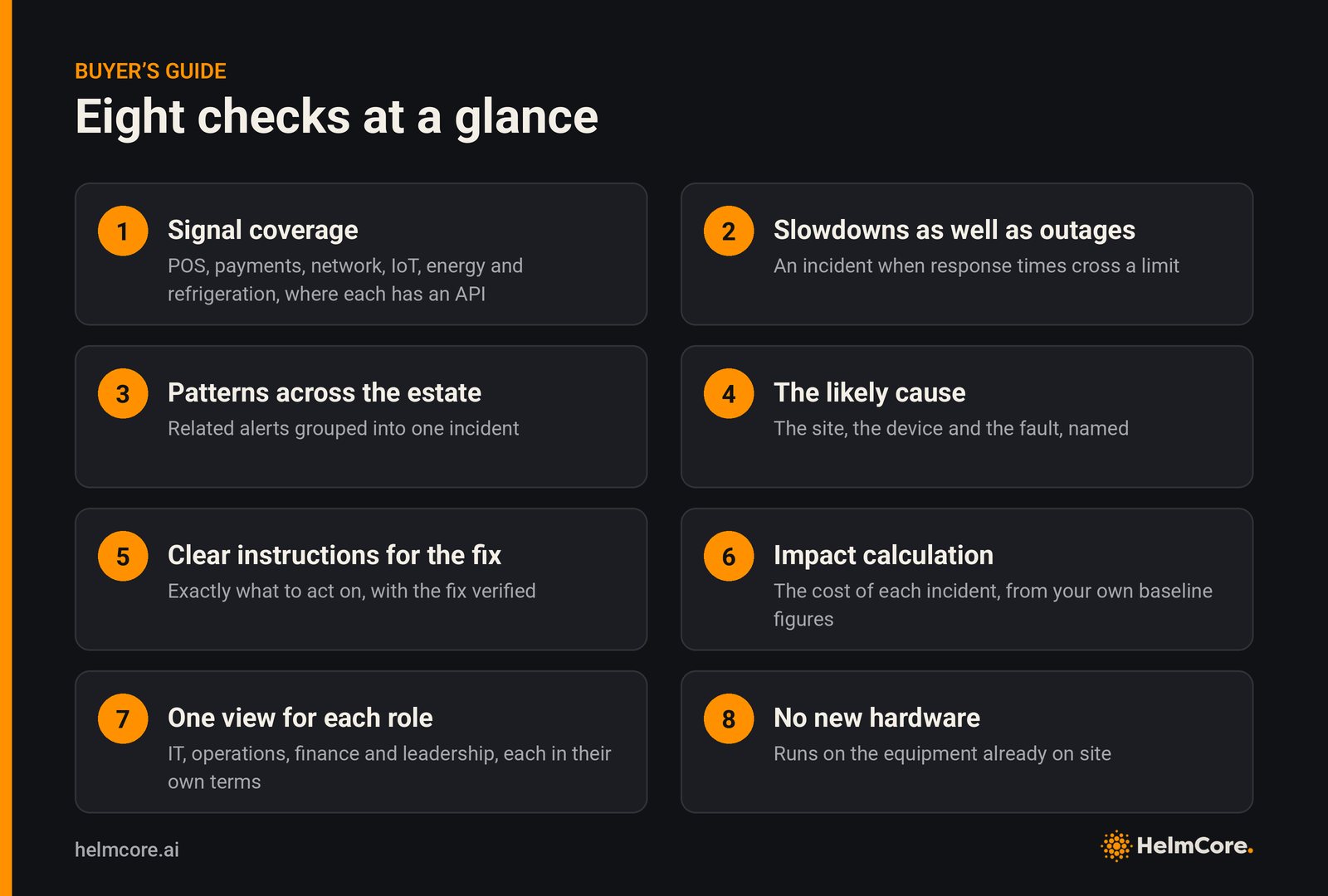
The eight-point checklist
1. Signal coverage: POS, payments, network, IoT, energy and refrigeration
Look for a platform that brings POS and network signals together with payments monitoring, IoT devices, energy and refrigeration systems monitoring, covering each of these wherever the system has an API. Broad coverage lets the platform link a fault in one system to its effect in another, such as a network problem that stops card payments or a site issue that puts chilled stock at risk.
Ask the supplier to show you: which of your systems connect from the start, and how new ones are added later.
2. Degradation as well as outages
A payment terminal that slows down at the lunchtime peak costs sales before it ever goes offline. Choose software that measures how quickly your business applications respond from each site and raises an incident when a limit is crossed. Slowdowns then get the same attention as full outages.
Ask the supplier to show you: an incident raised from a slowdown, before the application went offline.
3. Patterns across the estate
A network issue at one store is an incident. The same issue at a group of stores points to something they share: a supplier, a software release or a regional connection. Look for a platform that groups related alerts into a single incident and shows when a problem is spreading, so your team works on one problem instead of a stack of separate alerts.
Ask the supplier to show you: one incident built from related alerts at several stores.
4. The likely cause
Alerts tell you something is wrong. The platform you choose should correlate signals across systems and point to the likely cause, naming the site, the device and the fault.
Ask the supplier to show you: a real incident, and how their tool tells a network fault apart from a faulty terminal.
5. Clear instructions for the fix
Once the likely cause is clear, your team needs to know what to do about it. Look for software that tells your team exactly what to act on, in plain language, and confirms when the fix has been verified. Engineer visits are then kept for the problems that need someone on site.
Ask the supplier to show you: the instructions your team would receive for a real incident, and how the fix is verified.
6. Impact calculation
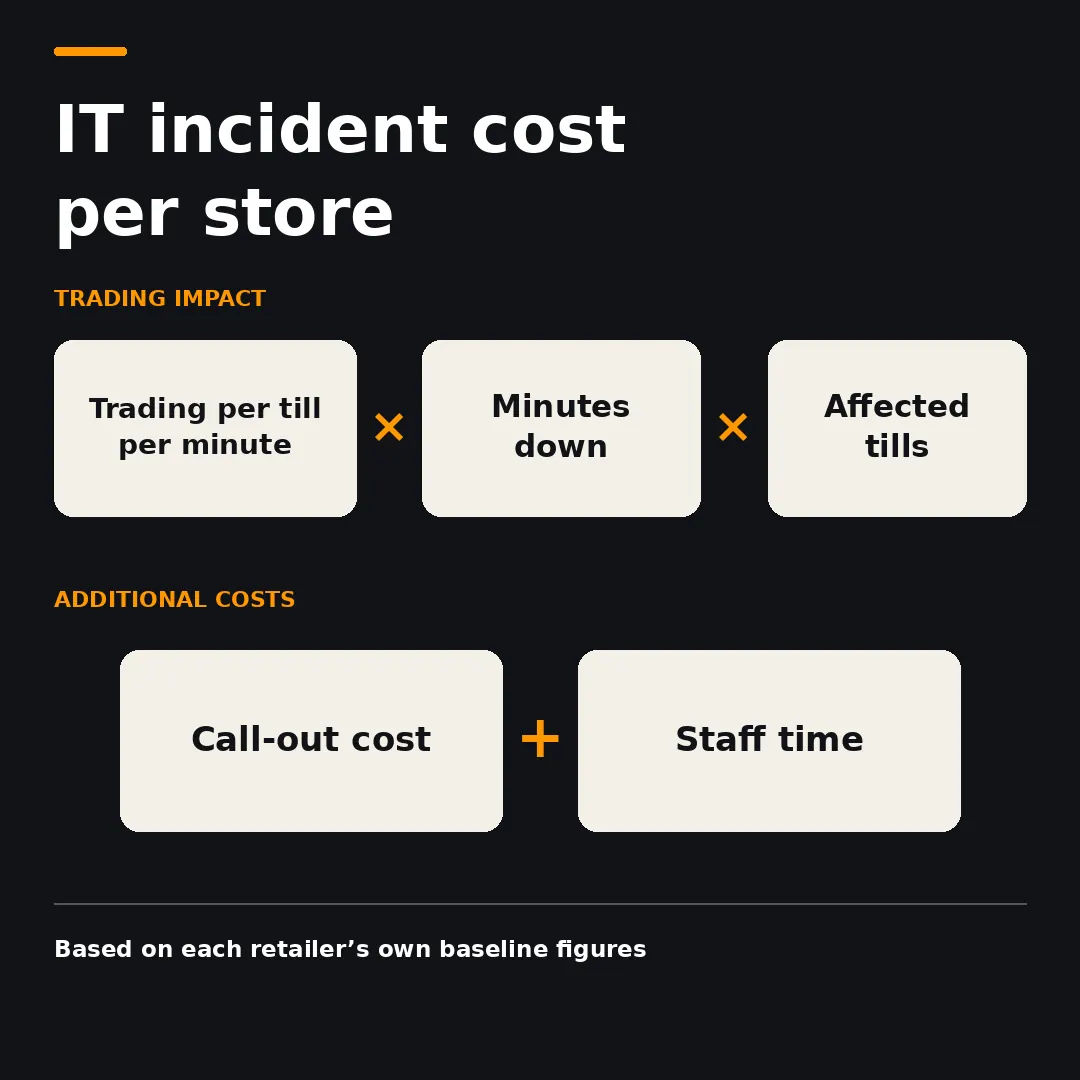
IT measures uptime, while the rest of the business measures sales and margin. Choose a platform that shows the financial impact of each incident in real time, based on your own baseline store figures, so the costliest problems are dealt with first.
Ask the supplier to show you: how the calculation works, and who on your side sets and validates the baseline figures.
7. One view for each role
IT, operations, finance and the leadership team need the same incidents described in their own terms. Look for role-based views, so IT sees devices and likely causes while finance and the board see business exposure across the estate. Every team then works from one shared version of events.
Ask the supplier to show you: the same incident in the IT view and in the finance view.
8. No new hardware
New hardware means site visits, installation windows and more equipment to maintain. Favour software that runs on the machines and network equipment your stores already have.
Ask the supplier to show you: how it is deployed across the estate, where your data is held and which security certifications they hold.
Putting the checklist to work
Score every shortlisted tool against all eight checks, including the ones that rarely feature in a demo. Bring IT, operations and finance into the evaluation early, since each will weigh the checks differently, and the strongest choice for retail estate management is one all three teams can use every day. Write the eight checks into your requirements document, so every supplier answers the same questions in the same order and gaps are easier to spot. Ask for evidence at every step: a live walkthrough on your own data tells you more than a feature list.
Frequently asked questions
What should retailers look for in operational intelligence software?
Eight things: coverage of POS, payments, network, IoT, energy and refrigeration; slowdowns as well as outages; patterns across the estate; the likely cause of each incident; clear instructions for the fix; the financial impact of each incident; a view for each role; and deployment on equipment you already have.
How does operational intelligence compare with retail observability tools?
Observability tools report on the health of individual systems, for the engineers who run them. Operational intelligence correlates signals across POS, payments, network, IoT, energy and refrigeration in the context of each store, and shows what each incident means for the business and what to do next.
Can one platform cover payments monitoring and refrigeration systems monitoring?
Yes, where those systems have an API. Ask each supplier which of your payment, refrigeration and energy systems connect from the start, and how new ones are added.
Does operational intelligence software need new hardware in each store?
The strongest options run on the machines and network equipment your stores already have, so they roll out across the estate with no site visits.
Where to start
HelmCore is an Operational Impact Intelligence platform built for multi-site retail estates, and it is designed around these eight checks: it runs on the equipment you already have, points to the likely cause of each incident and shows its financial impact, based on your own baseline store figures. To see how your estate measures up, request a Retail Visibility Review.

Latest insights and trends



See what's happening across your estate, in real time