
Your Self-Checkout Is Online. Your Customer Still Can't Pay.

Picture a Saturday afternoon in a busy convenience store. Six self-checkouts, every screen lit, every status light green. A customer taps their card. Nothing happens. They try again, then join the staffed queue, or put the basket down and walk out.
On the IT dashboard, that store looks healthy.
New research from Scalefusion shows how often self-checkouts let customers down. Across 730 self-checkouts in 100 London convenience stores, an average of 11% were unavailable. The detail that matters most is one store where every machine was running and none of them could take a contactless payment, for several days in a row.
The sample is London only, so treat it as a signal rather than a national figure. It is a signal worth taking seriously. At that rate, around 80 of the terminals surveyed were unable to serve the customer standing in front of them.
I spent a decade working with some of Ireland's largest retailers before starting HelmCore, and I recognise this pattern. Most estates measure whether a device is on. Far fewer measure whether it can complete the job it exists to do.
Those are two different measures. A terminal can be powered, connected and reporting in while payment authorisation slows to the point where customers give up. A card reader can pass every health check and still decline transactions because something upstream has changed. Device uptime tells you the hardware is there. Transaction success tells you the store is trading.
The gap between the two is where the money goes. Slow authorisations rarely trigger an outage alert. They build gradually, often across several stores at once, because the cause sits in a shared service, a network path or a payment provider rather than in any single till. By the time a store manager phones it in, the problem has been costing sales for an hour.
That cost is permanent. A sale lost at the checkout is gone, and the customer buys that sandwich and coffee somewhere else. In convenience and forecourt retail, disruption is unrecoverable by nature.
Self-checkout sharpens all of this. With a cashier at the till, someone notices a card failing and calls it in. At a bank of self-service machines, the first person to notice is the customer.
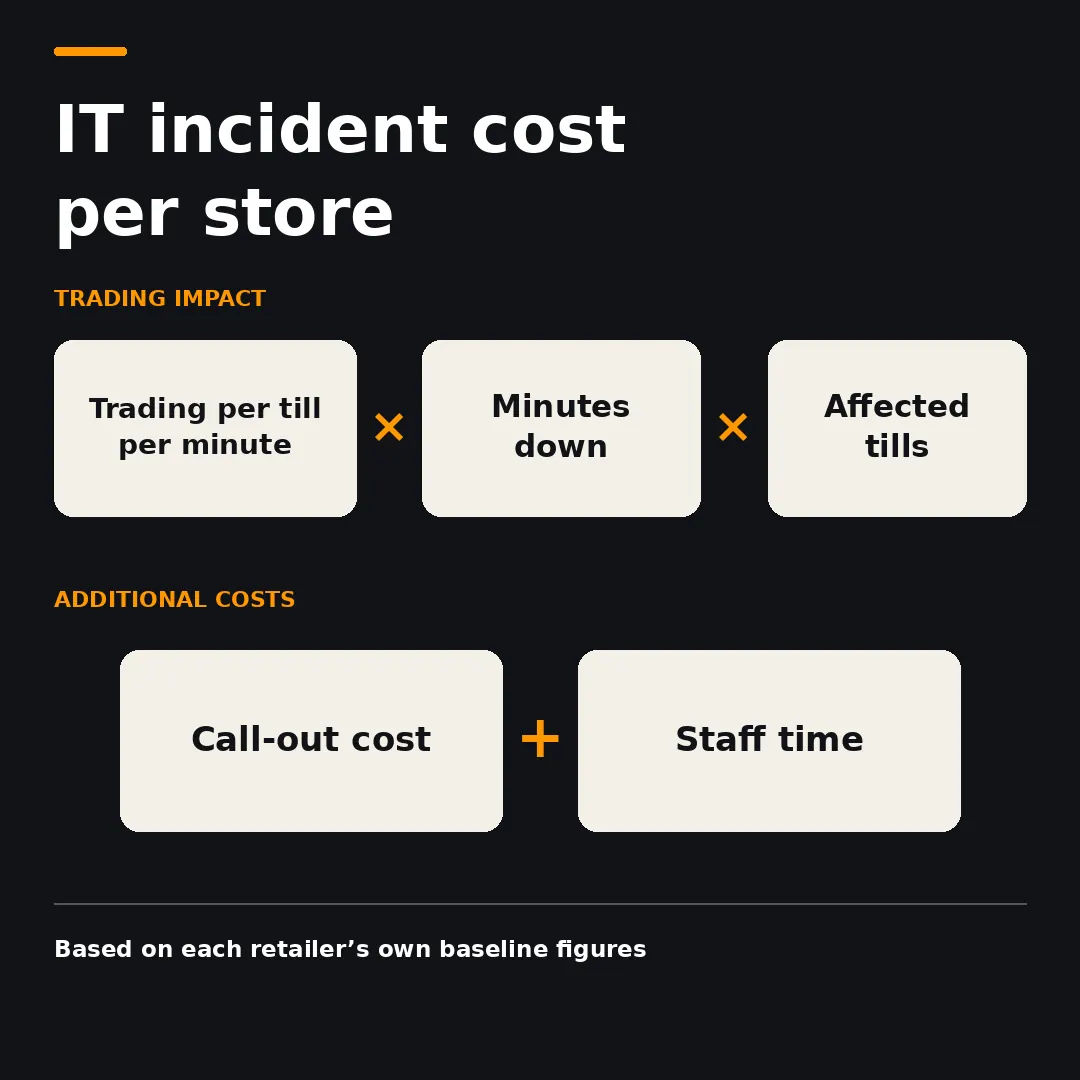
So here is the test I'd apply to any store technology estate. Picture a busy Saturday. Payment response times start creeping up across a dozen stores. A good setup spots the slowdown within minutes, sees that the stores share a cause, tells the right team what to look at, and shows what the slowdown is costing while it continues. A poor setup shows twelve green dashboards until the complaints arrive.
The shift is from measuring devices to measuring outcomes. Payments, POS, stock and pricing are what a store trades on. Measure how each one performs at every site, from the site itself, and use the device and network signals underneath as the evidence of what went wrong and what it costs.
The retailers who get this right will judge their checkout technology by one measure: whether the customer completed the purchase. Everything else is evidence.
Measure your technology by what it does for your business.

Latest insights and trends



See what's happening across your estate, in real time