
The Real Cost of Finding Out Too Late in Retail

In the fast-paced world of retail IT, the phrase 'we didn't know' often emerges during post-incident reviews. This statement, typically delivered in a subdued tone, highlights a significant issue: a lack of visibility rather than a lack of effort. Many IT and operations teams are diligently working to manage increasingly complex retail environments, yet they often lack the real-time insights necessary to preemptively address issues.
As retail operations expand, the systems and vendors involved become more numerous, complicating the landscape. The traditional methods of identifying problems, such as waiting for a store call or a staff report, are inadequate. This is fundamentally a visibility problem that requires a strategic solution.
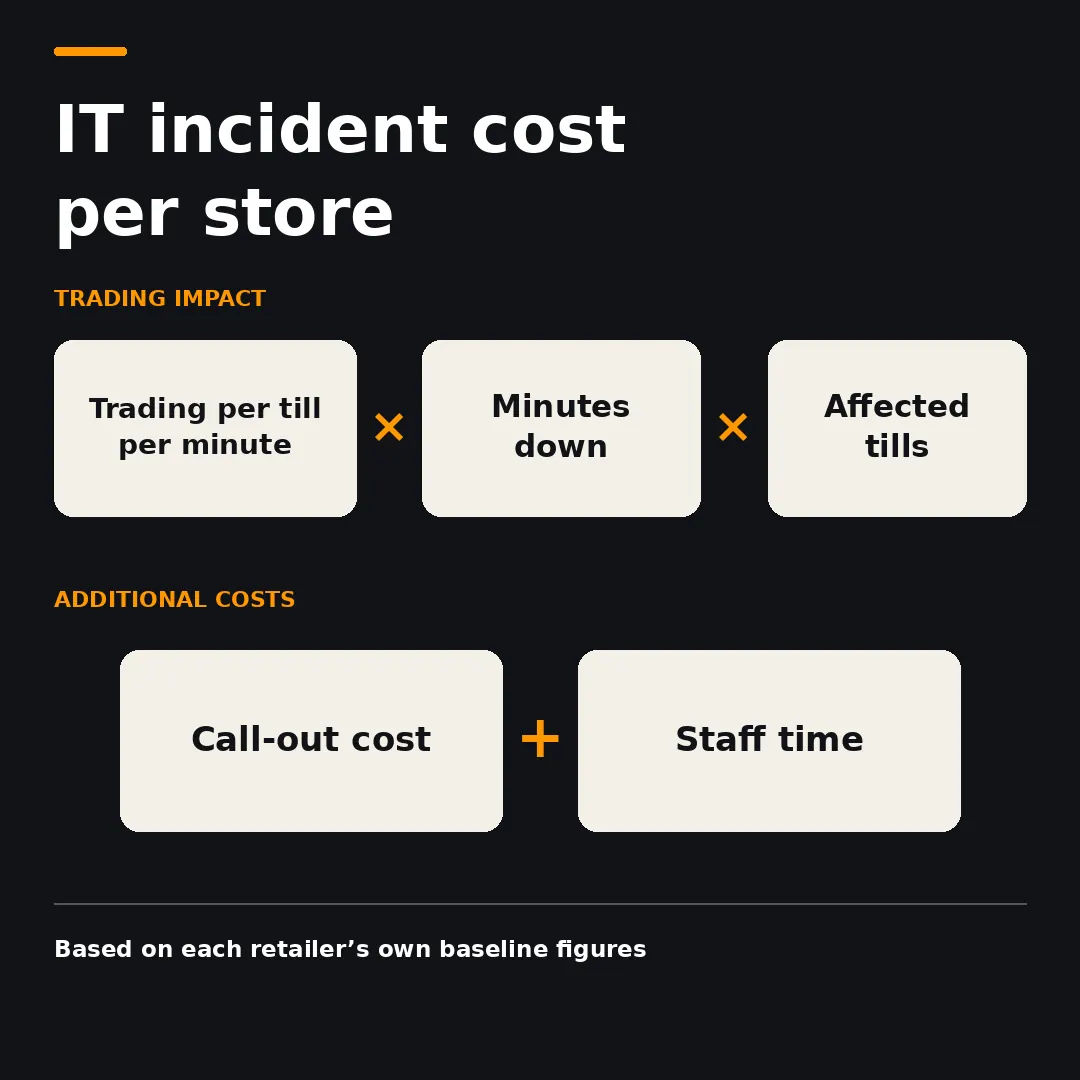
Common scenarios illustrate this issue: a slow-running till that goes unnoticed for twenty minutes, a network connection that intermittently fails overnight, or a fridge unit that drifts out of range without alerting anyone. These situations reveal that many systems are designed to notify users only after a failure has occurred, creating a lag that incurs significant costs.
Moreover, diagnosing the root cause of these issues is often a time-consuming process. Different systems operate in silos, each with its own dashboard, making it challenging to piece together the full story when something goes wrong. This fragmented approach can lead to unnecessary site visits and delays in resolution.
To address these challenges, bringing payments, POS, the network and the other systems your stores run on into a single view can transform incident management. By providing a comprehensive overview, teams can pinpoint the most likely cause before problems escalate into larger issues. This proactive approach not only streamlines operations but also enhances the efficiency of on-site visits, allowing engineers to arrive with a diagnosis already in hand.
Importantly, this shift does not require new hardware or extensive retraining. It leverages existing systems to improve visibility and correlation, addressing the fundamental question of what needs to be replaced to achieve better insights. The answer is often 'nothing,' which is a significant advantage in decision-making.
Ultimately, the goal is to create a clearer view of the estate, where the most likely cause is pinpointed promptly, reducing the reliance on reactive measures. If you find these challenges familiar, I invite you to share your experiences and solutions.

Latest insights and trends




See what's happening across your estate, in real time